
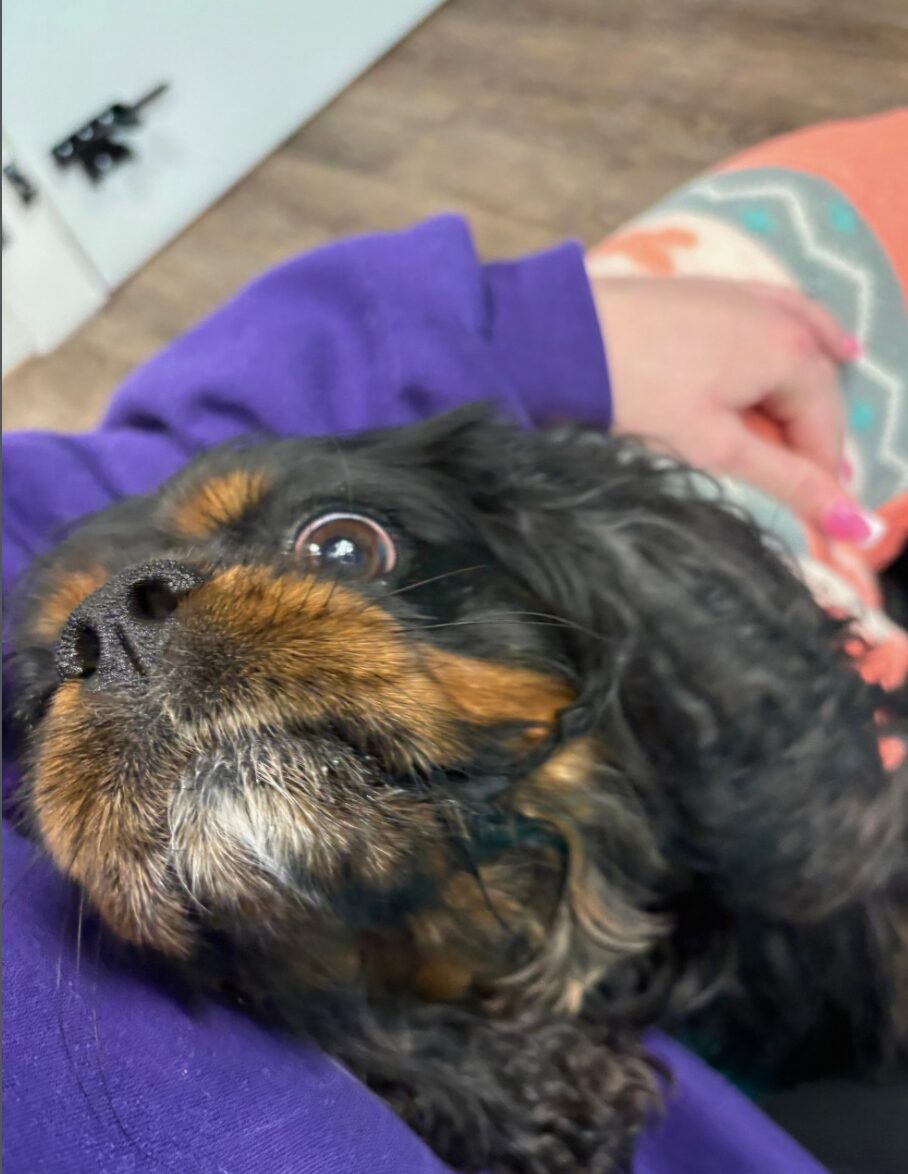

If you’re a dog parent in Cockeysville or Harford County, chances are you’ve seen some form of anxiety — maybe your dog struggles when you leave for work, gets overwhelmed in busy environments, or can’t quite settle in new situations. You’re not alone, and more importantly, your dog isn’t “bad” or “broken.”
Dog anxiety is common, it’s treatable, and with the right support, most dogs can learn to feel safer and more confident in the world around them.
Let’s break down what dog anxiety actually is, how it’s treated, how we support dogs with separation anxiety at daycare, and why gentle exposure and new experiences are such powerful tools.
What Is Dog Anxiety?
At its core, dog anxiety is a stress response. According to veterinary behavior experts, anxiety occurs when a dog anticipates a perceived threat or negative outcome — even if nothing “bad” is actually happening.
In real life, that can look like a dog who panics when left alone, freezes in new environments, or becomes overly excited because they don’t know how else to cope.
Common types of anxiety include:
- Separation anxiety – distress when separated from family
- Social anxiety – discomfort around other dogs or people
- Environmental anxiety – fear of new places, noises, or routines
- Change-related anxiety – schedule changes, moving, new family members
In areas like Cockeysville and Harford County, dogs often juggle quiet home life with sudden bursts of stimulation — commutes, busy weekends, seasonal events — which can magnify underlying anxiety if they haven’t learned how to process it yet.
Signs Your Dog May Be Anxious
Anxiety doesn’t always look like fear. Many anxious dogs appear “too excited” or “clingy,” which is why it’s often misunderstood.
Some common signs include:
- Barking, whining, or howling when alone
- Pacing, panting, trembling
- Destructive behavior during absences
- Difficulty settling or relaxing
- Avoidance of dogs, people, or new spaces
- Over-arousal that escalates quickly
Behaviorists emphasize that these behaviors are communication, not defiance. Your dog is telling you they’re struggling to cope.
How Dog Anxiety Is Treated
Research consistently shows that anxiety is best addressed through a multi-layered approach. There’s no quick fix — but there is a clear path forward.
1. Predictable Routines
Dogs feel safer when life is predictable. Consistent schedules help regulate stress hormones and reduce uncertainty.
2. Mental and Physical Enrichment
Enrichment activities — sniffing, problem-solving, structured play — give dogs healthy outlets for stress. Veterinary studies show that mental engagement is just as important as physical exercise for anxious dogs.
3. Gradual, Positive Exposure
Avoiding stressors completely can actually make anxiety worse. Controlled exposure, paired with positive experiences, helps dogs learn that new situations aren’t dangerous.
4. Professional Support
For moderate to severe anxiety, collaboration with trainers, behaviorists, or veterinarians may be necessary. In some cases, medication is used alongside behavior modification — not as a replacement for it.
How We Support Separation Anxiety at Daycare
At Best Friends Fur Ever, daycare isn’t about constant chaos or nonstop play. It’s about emotional regulation, confidence-building, and safety.
For dogs with separation anxiety, we focus on teaching that:
- being away from home is temporary and safe
- rest is okay
- new environments don’t equal danger
What that looks like in practice:
Thoughtfully matched social groups
Dogs are placed with compatible playmates to reduce social pressure and overstimulation.
Structured rest and decompression
Downtime is built into the day. Research shows that chronic overstimulation can worsen anxiety — so we actively prevent it.
Consistent caregivers and routines
Familiar faces and predictable flow help dogs settle faster and feel secure.
Real-time observation and intervention
If a dog shows signs of stress, we step in with redirection, calming strategies, or quiet time — not punishment.
Calming sprays and chews
Calming sprays use scent-based signals that interact with a dog’s olfactory system to promote a sense of safety, while calming chews encourage natural chewing behaviors that help release tension and regulate stress-related hormones.
This structured environment allows dogs to practice independence while still feeling supported.



Why Exposure and New Experiences Help Reduce Anxiety
It’s natural to want to shield anxious dogs from anything stressful — but science tells us that appropriate exposure is one of the most effective tools we have.
Behavior research shows that when dogs experience new situations in a controlled, positive way, their brains form new associations. Over time, fear is replaced with familiarity.
At daycare, this might include:
- calmly entering new spaces
- learning to relax around other dogs
- practicing separation without isolation
Each small success builds confidence. And confidence is the antidote to anxiety.
Is Daycare Right for Every Anxious Dog?
Not always — and that’s okay.
The right daycare should prioritize emotional well-being over constant stimulation. Some dogs thrive in smaller groups or slower-paced programs, especially early on.
That’s why individualized care options, like assisted or modified daycare programs, are so important for anxious dogs.
Supporting Anxious Dogs in Cockeysville & Harford County
Anxiety isn’t a failure. It’s information.
With patience, structure, exposure, and the right environment, most dogs can learn to navigate the world with more confidence.
If you’re a pet parent in Cockeysville or Harford County, MD and your dog struggles with separation anxiety or stress-related behaviors, our team at Best Friends Fur Ever is here to help.
Contact us to learn more about our anxiety-supportive care options.
Sources
- American Veterinary Society of Animal Behavior (AVSAB). Position Statements on Behavior Modification
- American Animal Hospital Association (AAHA). Canine Separation Anxiety Guidelines
- Merck Veterinary Manual. Behavior Problems in Dogs
- Journal of Veterinary Behavior. Treatment and management of separation-related behaviors in dogs
- UC Davis School of Veterinary Medicine. Canine Behavior & Anxiety Resources
- ASPCA. Understanding and Treating Separation Anxiety