
Someone Stole Baby’s Wheelchair. The Internet Helped Her Get Her Wheels Back.
What one viral story can teach all of us about mobility, independence and creating more good days for dogs with disabilities.
It started with a story that was almost impossible for dog lovers to scroll past.
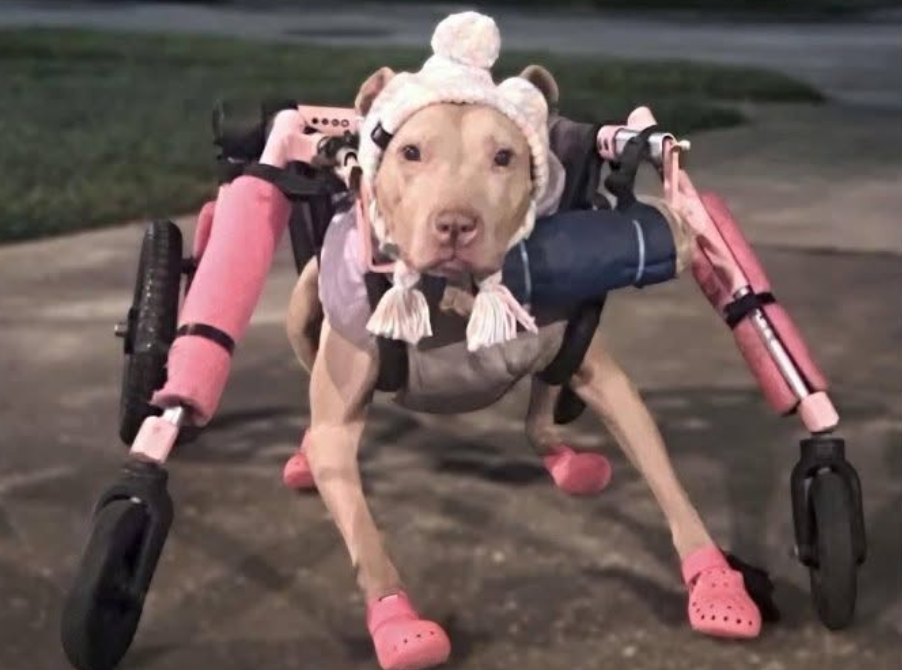
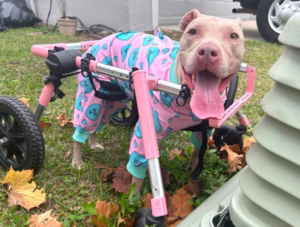
Baby, a senior disabled pit bull and hospice resident with The Pittie Party of Central Florida, relies on a specialized pink wheelchair to move safely and maintain some of her independence.
Then someone stole it.
The approximately $800 custom wheelchair was taken from the porch of Baby’s foster home in St. Cloud, Florida, on August 19. Without it, Baby couldn’t simply get up and move around like she normally would. Because of her neurological condition, her wheelchair helps support her body, allows her to move safely and even helps her maintain enough independence to go to the bathroom.
The story quickly spread across social media, was shared by the St. Cloud Police Department and gained local and national media attention — including coverage here in Maryland.
And then something much better went viral: people wanted to help.
Donations began coming in. People offered to purchase a replacement. And Ruck9, a nonprofit that helps disabled animals access mobility equipment, stepped forward and ordered Baby a new pink wheelchair.
Her new wheels are on the way.
A Dog Wheelchair Is More Than a Set of Wheels
For those of us who care for senior dogs, dogs with disabilities and dogs recovering from injuries, Baby’s story hits differently.
A mobility device isn’t an accessory.
For the right dog, it can be a tool for movement, independence, enrichment and quality of life.
Dog wheelchairs and mobility carts may be recommended for dogs experiencing paralysis, neurological conditions, spinal injuries, orthopedic conditions, degenerative disease or age-related mobility loss. Some dogs use them long term, while others may use mobility equipment as part of a veterinarian-directed recovery or rehabilitation plan.
And Baby is far from alone.
The global pet wheelchair market is projected to grow from approximately $563 million in 2026 to more than $760 million by 2030, according to Grand View Research. Dogs represent the largest segment of that market, with growing awareness of mobility solutions and advances in veterinary care contributing to demand.
Behind those numbers are thousands of families making a simple decision: My dog still wants to experience life. How can I help them do it?
Mobility Challenges Don’t Mean the Good Days Are Over
This is something we understand deeply at Best Friends Fur Ever in Maryland.
Through our Assisted Canine Care (ACC) and ACC+ Recovery Care programs at our Cockeysville dog care resort, we meet dogs whose needs don’t always fit the traditional picture of dog daycare or boarding.
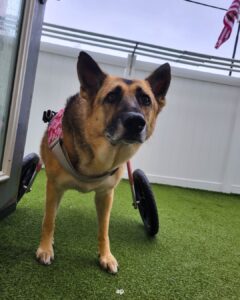
Some are seniors. Some need additional mobility support. Some are blind or deaf. Some need ramps or a calmer environment.
Others are recovering from an injury or procedure and need activity restrictions, medication schedules or help following veterinarian-provided recovery instructions.
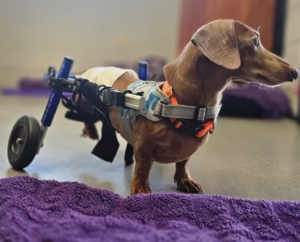
And sometimes, a dog arrives with wheels. What matters isn’t whether a dog can run across a play yard like they once did.
It’s asking: What does a good day look like for this dog now?
The goal doesn’t always have to be getting a dog back to what they once could do. Sometimes great care means adapting their world to what they can do today.
Caring for a Dog With Mobility Challenges
For Maryland pet parents caring for a senior dog, disabled dog or dog recovering from an injury, mobility changes can feel overwhelming.
But small adaptations can make a big difference.
Ramps can make transitions easier. Rugs and non-slip surfaces can provide additional traction. Support harnesses and slings can help some dogs navigate safely. Orthopedic bedding can make rest more comfortable. And for certain dogs, a properly fitted wheelchair or mobility cart can provide an entirely new way to explore their world.
Most importantly, mobility equipment should be selected with guidance from your dog’s veterinary or rehabilitation team. Every dog’s condition, strength and support needs are different.
A wheelchair isn’t about forcing a dog to keep going.
It’s about giving the right dog the support to keep participating in the things that bring them joy.
More Good Days Can Look Different
That’s ultimately why Baby’s story resonated with so many people.
Yes, someone did something awful. But thousands of strangers immediately understood what had actually been taken from her. It wasn’t just an $800 piece of equipment.
It was freedom. Movement. Independence.
The community rallied, Baby’s replacement wheelchair is on its way, and soon one very determined pit bull should be rolling again.
At Best Friends Fur Ever, we believe dogs deserve care that evolves as they do — from energetic puppies and social daycare regulars to seniors, dogs with mobility challenges and dogs who simply need a little more help than they used to.
Because getting older, recovering from an injury or moving through the world differently doesn’t make those days matter any less.
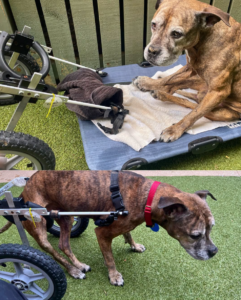
More good days for the dogs who make your family whole.
Assisted Canine Care and ACC+ in Maryland
Best Friends Fur Ever provides specialized care options for dogs with additional physical, mobility and age-related needs at our Maryland dog daycare and boarding resorts.
Our Assisted Canine Care (ACC) program provides a calmer, supportive environment for dogs who may benefit from additional assistance, while ACC+ Recovery Care in Cockeysville, Maryland provides individualized support for medically stable dogs with veterinarian-directed recovery needs.
If you’re searching for senior dog boarding in Maryland, special-needs dog care, dog boarding for mobility-challenged dogs, post-surgery dog care in Maryland or specialized dog boarding near Baltimore, we’d be happy to talk with you about your dog’s individual needs.